Most family caregivers already check on their parent. They ask whether medications were taken, notice when the fridge is emptier than usual, or hear when something sounds off during a phone call. The difference between remembering and managing is writing those checks down.
A useful caregiver checklist works across three timeframes. Daily, you check medication, food and fluids, movement, mood, home hazards, and the alert device. Weekly, you look for the things that quietly slip: groceries, laundry, appointments, and medications. Monthly, you compare what you see today with what you wrote last month.
That final step is the one families skip most often, and it is how gradual changes become visible before they become emergencies.
Key takeaways
- The daily list holds six items: medication, food and fluids, movement, mood, home hazards, and the alert device.
- A written record beats a good memory, because everyone sharing the care sees one picture instead of four partial ones.
- Clinicians using CDC’s STEADI initiative screen fall risk with three questions: has the person fallen in the past year, do they feel unsteady standing or walking, and do they worry about falling.
- The National Institute on Aging recommends keeping a current list of every medication your parent takes, including anything over the counter.
- Gradual decline only becomes visible when you compare the same written questions across months.
- NIA reports caregivers are less likely than others to get preventive care such as annual checkups, so the routine has to include you.
Why Most Caregivers Operate Without a System and What That Costs
You probably do know what to check. Writing it down solves a different problem: consistency across people. Four people caring for one parent check four different things, each assuming the others covered the rest. The Sunday visitor sees a tidy kitchen and decides meals are handled, and nobody has looked in the freezer since March.
Most families never write down the caregiver duties and responsibilities for elderly parents that they absorbed one errand at a time, so nobody can see the shape of the job. UnaliWear’s complete family guide covers how those roles divide. Leaving it undefined costs you twice, in gaps and in exhaustion.
Why keeping a written record matters
A check you made in your head on 14 March is gone by 20 April. A dated line answers what a clinician will ask: when did this start, and how often?
The Daily Safety Checklist: What to Check and When
Treat what follows as an elderly caregiver daily checklist template rather than a form to complete. The point is a rhythm you can keep, not pressure or perfection.
| Check |
What a real yes looks like |
| Medication taken |
The dose compartment is empty and they can describe the pill |
| Ate and drank |
One meal you can name, plus fluids that went down |
| Moved and walked |
They got up and crossed a room without holding furniture |
| Mood and alertness |
They sound like themselves and follow a conversation |
| Home hazards |
Floors clear, lights working, nothing stacked on the stairs |
| Device worn and charged |
On the body, not on the nightstand |
Two of these checklist items come directly from clinical guidance. CDC’s Stay Independent checklist treats steadying yourself on furniture as a sign of poor balance, and NIA advises nonskid, low-heeled shoes over socks or smooth soles on stairs and floors.
The morning medication check
“Did you take it?” gets a yes from almost everyone, and an empty Tuesday compartment only proves the pills left the box. Ask something with a checkable answer instead: “Which one was the white oval?”
Check that:
- Morning dose out of the organizer, and they can name it
- Up and dressed at their usual time
- Breakfast happened, and you know what it was
- Shoes on, rather than socks alone on a hard floor
- Alert device on the wrist or around the neck
Through the middle of the day

Check that:
- Water or juice within reach
- Up and moving, not in the same chair since breakfast
- Nothing new on the stairs or the path to the bathroom
The evening check-in call
“How was your day?” produces “fine” from everyone. Two questions do better, because neither can be answered without recalling something: “What did you eat?” and “What did you do?” Someone who cannot name a meal often did not have one, though a memory change can produce the same blank.
Check that:
- Evening dose taken
- They can name one thing they ate and one thing they did
- Voice, word-finding, and steadiness sound normal
- Doors locked, with a light on for the night route to the bathroom
- Device charged, or the spare battery ready
The Weekly and Monthly Monitoring Checklist
The weekly caregiver duties for elderly parents are the ones that fail quietly. Nobody notices an unrefilled pill organizer on the day it happens, but by Thursday the doses no longer match the days. Pick one fixed time each week and work through the same checklist.
Check that:
- The pill organizer has been refilled, and last week’s compartments are empty.
- Groceries are restocked, and perishables have been checked for expiration dates.
- Laundry is done, and bedding has been changed.
- Mail has been opened, bills have been paid, and nothing urgent is buried in the pile.
- Appointments for the week ahead are confirmed, and transportation is arranged.
- You have had one real conversation that is not just a status check.
That last item earns its place. The National Institute on Aging treats social contact as part of health and suggests looking inside the fridge and pantry when you visit. Home hazards belong here as a scan, not a project: new clutter on the stairs, a rug that has slid. The room-by-room version is its own job, covered in our home safety checklist. If your parent has already fallen, start by assessing fall risk.
The monthly review
Once a month, answer the same questions using the same wording. Comparison only works if you measure the same things each time.
Check that:
- Weight is recorded using the same scale at roughly the same time of day.
- Sleep patterns are noted, including bedtime, wake time, and how often they get up during the night.
- Gait and balance are unchanged, including whether they push up from a chair or steady themselves on furniture.
- Any memory or confusion changes are noted, such as repeated questions, missed bills, or difficulty following a familiar recipe.
- Mood and interests remain the same, including whether hobbies or regular outings are still happening.
- The medication list is up to date, including over-the-counter medicines and any new side effects.
- You have written one sentence describing what, if anything, is different from last month.
Two of these checklist items come directly from clinical practice, adapted for family use. CDC’s STEADI algorithm has clinicians screen fall risk using three questions: whether the person has fallen in the past year, feels unsteady standing or walking, or worries about falling. Those are clinician tools, and nothing on this page replaces them. Your job is simply to notice whether standing looks harder than it did last month and pass that information on to the doctor who can evaluate it.
How to Track Changes in Health and Behavior Over Time
A single missed meal is nothing. The same missed meal three weeks running is data, and the difference is whether you wrote it down. Daily checks answer “is today all right?” Trends answer the one that gets a diagnosis: what has been happening since spring?
Five pounds arrives one pound at a time. Date every note and compare in writing, not from memory.
What a usable entry looks like
Three fields are enough: the date, the observation in plain words, and the count. “3 June, second time this month she asked what day the appointment was.” A doctor can work with that. “Mom seems more forgetful lately” has no date and no frequency.
Pay more attention to the slow signals than the dramatic ones: weight, appetite, sleep, walking speed, word-finding, a routine that stopped. A hobby dropped in April is easy to explain away in the moment, harder four notes later.
When to hand the record to a clinician
This record gives a doctor better raw material, and it does not stand in for the visit. NIA lists signs it might be time to talk with a doctor: repeated questions, getting lost in places once known well, trouble following recipes or directions, growing confusion about time, people, and places, and self-care slipping. Forgetting a word occasionally reads differently from trouble holding a conversation, and dated notes make that distinction visible.
Memory changes are not always what they appear to be either. NIA notes that medication side effects, thyroid or kidney problems, depression, poor sleep, and low vitamin B12 can cause memory problems that often improve once treated. Arrive with dates, not a conclusion.
How the Kanega Watch Automates the Safety Layer of Your Checklist
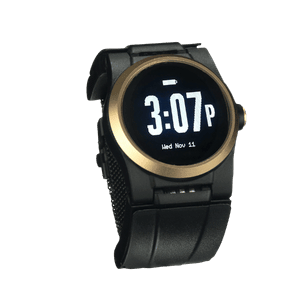
“Did they fall and say nothing” is a question you cannot answer by asking. The Kanega Watch covers that item continuously. RealFall™ was trained on actual falls recorded by real wearers rather than staged drops in a lab, and an alert routes to a US-based, Five Diamond certified monitoring center staffed 24/7. No fall detection system catches every fall, so your evening call still matters.
The other item is charging. Most alert devices come off at night for a dock, exactly when bathroom trips happen. Kanega uses swappable band batteries, so a charged spare goes on while the watch stays on the wrist, which is one of the device features that matter most for daily wear. Everything else still needs a person: hardware covers the moment something goes wrong, and the slow change across months is yours to see.
Your parent’s independence is the point of all this. A quiet routine in the background lets them keep their own kitchen, their own hours, and their own choices. If you want the morning dose off your daily list, the Kanega Watch’s medication reminder settings can be edited from the wearer portal.
If you would rather talk it through than read another list, call 888-343-1513 or email community@unaliwear.com. Our Care and Safety Experts can walk you through plans, pricing, and whether the Kanega Watch fits your loved one’s routine.
Frequently Asked Questions
Can I print this checklist or share it with my siblings?
None of it sits behind a form. If you came looking for a free printable caregiver daily checklist elderly parents’ families can actually use, this page is it. Highlight the checkbox blocks, paste them into a shared note, and print from your browser.
My parent says the checking feels like being watched. What then?
Show them the list. Most people accept support and resist surveillance, and the difference becomes obvious once they can read it and cross things off.
Who should hold the record when several people share the care?
One person owns the file and everyone writes in it. A shared note beats a group chat, where entries scroll out of reach. Two siblings describing the same week differently is how a Sunday review becomes an argument.
What if I cannot keep it up every day?
Then you keep it most days, and that carries. Rather than dropping the routine in a hard month, NIA suggests breaking large jobs into smaller tasks and letting people who offer pick a specific piece, which is usually how the weekly list survives. This system exists to reduce what you carry, and it works at eighty percent.