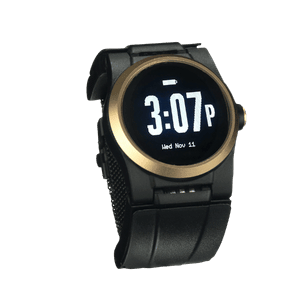
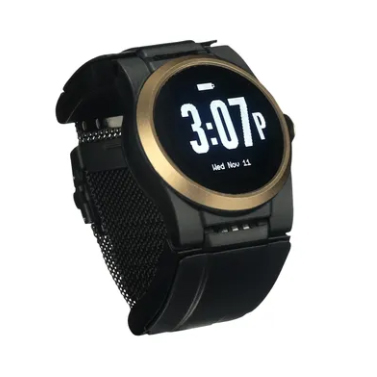
Every fall detection device claims advanced sensors. Few publish real accuracy data. If you are choosing a watch for someone you love, the numbers matter more than the marketing.
This guide explains how smartwatch fall detection sensor accuracy is measured, how the Apple Watch and Samsung Galaxy Watch compare to dedicated medical alert watches, and why the gap between lab results and real life decides whether help actually arrives.
Key takeaways
- Smartwatch fall detection uses an accelerometer and gyroscope to identify sudden motion changes that match known fall patterns.
- Apple Watch fall detection targets hard, high-impact falls and contacts 911 rather than a staffed medical alert monitoring center.
- Hard falls produce sharp impact forces, while soft falls from fainting or slow slumping create less force and go undetected more often.
- Samsung Galaxy Watch detects hard-impact falls and sends an SOS message with location to preset emergency contacts, not a monitoring center.
- Dedicated medical alert watches route fall alerts to a 24/7 monitoring center where a trained responder assesses the situation and dispatches help.
- No fall detection system detects every fall, so accuracy figures describe tested conditions rather than a guarantee of real-world performance.
- RealFall™ fall detection trains on real falls from Kanega Watch wearers, so the algorithm learns older adults’ actual movement patterns instead of lab simulations.
How Fall Detection Sensors Actually Work Inside a Smartwatch
A fall detection sensor reads motion data and decides, in seconds, whether a movement was a fall. When the pattern matches, the watch starts a countdown and sends an alert if the wearer does not cancel it. Some devices let wearers change the length of this countdown, trading a faster response for more time to cancel false alarms.
So how do fall detection devices work in plain terms? The watch tracks the speed, direction, and angle of your wrist many times per second. Its software compares that stream against known fall profiles. If the motion crosses a set threshold, the alert sequence begins. Accuracy comes down to how well those profiles match the way a real person falls.
Two components do most of the work.
Accelerometer and gyroscope
An accelerometer measures sudden changes in speed and direction. A gyroscope measures rotation and orientation. Together they tell the watch the difference between a wrist swinging during a walk and a body dropping toward the floor.
Some watches add a barometer to sense the small altitude change when someone goes from standing to lying down. More sensor data gives the algorithm more to work with, though it does not guarantee a catch.
Hard falls vs. soft falls
Not every fall looks the same to a sensor.
A hard fall is a sudden, high-impact event: tripping on a curb, slipping on a wet floor, losing balance on stairs. The spike in force is sharp and easy to detect.
A soft fall is slower: fainting from low blood pressure, sliding down a wall, or slumping into a chair after dizziness. These produce far less force, so many consumer smartwatches read them as normal motion and stay silent.
Sensitivity, specificity, and the two ways fall detection fails
Engineers describe accuracy with two terms. Sensitivity is how often the device catches a real fall. Specificity is how often it correctly ignores a non-fall.
When a device gets it wrong, it fails in one of two directions.
- A false alarm (sometimes called a false positive) is an alert when no fall happened, often from a dropped watch or a hard arm movement.
- A missed fall (sometimes called a false negative) is a real fall the watch missed, often a soft fall or a device worn too loosely.
Higher sensitivity settings can catch more real falls, but they may also trigger more false alarms. Lower sensitivity settings help reduce false alarms but increase the chance of missing some falls. Some devices allow wearers to adjust this balance based on their preferences and daily routines. A device that triggers frequent false alarms may end up unworn, leaving the wearer without protection when it matters most.
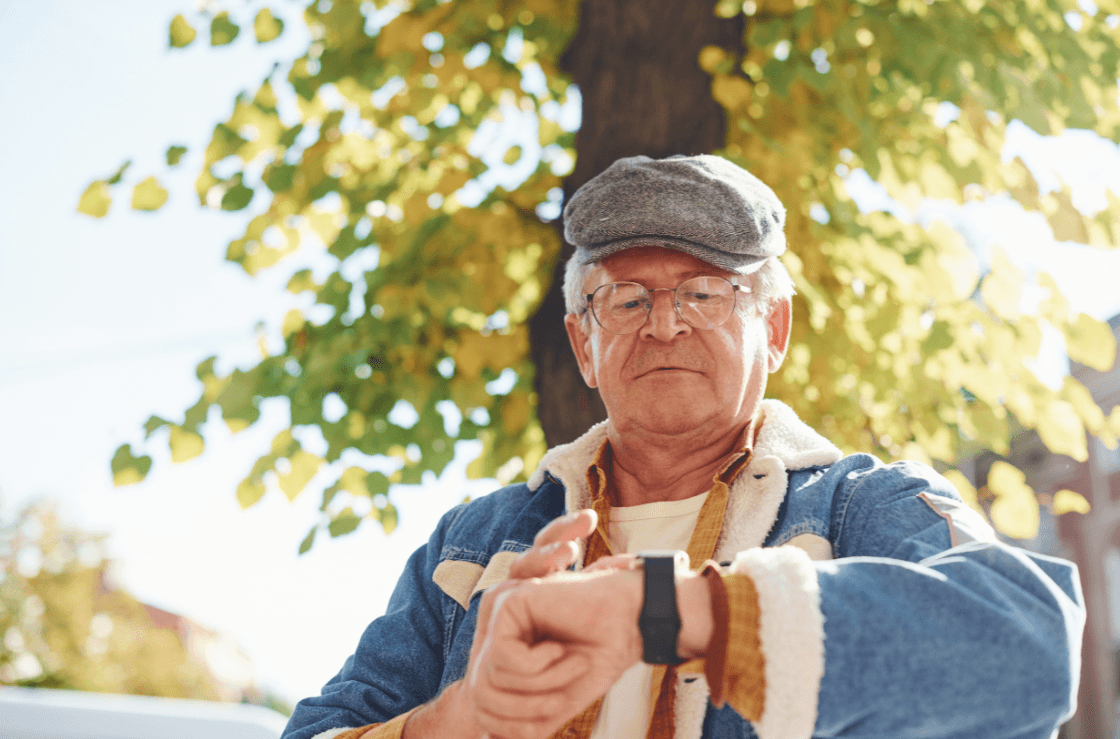
Apple Watch vs. Samsung vs. Dedicated Medical Alert Devices: Accuracy Compared
Direct accuracy numbers are hard to find because companies test differently and rarely publish the same metrics.
The clearest pattern from independent reviewers: dedicated medical alert watches are built for fall detection first, while consumer smartwatches add it as one more feature among hundreds. A senior products review site walked through that difference in its Kanega Watch versus Apple Watch comparison.
The table below compares the major differences in how these devices approach fall detection and emergency response.
| Device |
What it is built to catch |
Where the alert goes |
Key limitation |
| Apple Watch (Series 9 and later) |
Hard, high-impact falls |
911 |
Apple notes it works best on hard falls and may not detect all slip types |
| Samsung Galaxy Watch |
Hard-impact falls |
911 or contacts |
Tuned for sudden force; soft falls often missed |
| Medical alert watches (MGMove / Bay Alarm) |
Hard and many soft falls |
Monitoring center |
Smartwatch form factor focused on life safety; some complexity from lifestyle features |
| Kanega Watch (RealFall™) |
Hard and soft falls, trained on real wearer data |
Monitoring center |
A dedicated life safety device focusing on simplicity with few lifestyle features |
The comparison highlights two important points.
First, no smartwatch catches every fall. Consumer smartwatches are designed to recognize hard, high-impact falls, so slower collapses and soft falls can be more difficult to detect.
Second, what happens after a fall can differ just as much as the detection itself. Apple Watch and Samsung Galaxy Watch route alerts to 911 or emergency contacts, while dedicated medical alert watches connect wearers to a 24/7 staffed monitoring center where trained agents can assess the situation, contact family, and dispatch help.
Apple’s own documentation states that fall detection is designed for hard falls and may not trigger during every type of fall. That is an honest limitation. Apple Watch and Samsung Galaxy Watch are designed as general-purpose smartwatches, with fall detection added as one of many features.
Dedicated medical alert watches take a different approach. They are built specifically for emergency response, connecting wearers to trained monitoring agents who can assess the situation, contact family, and dispatch help. Some, such as the Kanega Watch, also use fall detection trained on real-world wearer data rather than relying solely on staged laboratory falls.
Why Consumer Smartwatches Miss Falls That Dedicated Devices Catch
Consumer smartwatches miss falls for a practical reason: they are tuned to avoid annoying healthy, active users. A watch that alerts every time you set down a heavy bag would get switched off within a week. So Apple and Samsung set their thresholds high, which means soft falls slip under the radar.
The soft fall blind spot
Older adults often do not fall with a dramatic thud. They slump, slide, or crumple when blood pressure drops or legs give out. SafeHome and Forbes Health both note that these low-force events are exactly the ones high-threshold consumer sensors are least likely to register.
A dedicated medical alert watch tunes its algorithm toward the way older adults actually fall, even at the cost of more false alarms, because a missed fall is the more dangerous error.
Where the alert goes
Accuracy is only half the story. What happens after detection matters just as much.
The Apple Watch connects to 911, not to a monitoring center. There is no trained agent who knows the wearer’s medical history, can call family first, or can verify a false alarm before dispatching help.
A dedicated medical alert watch routes the alert to a staffed monitoring center: a 24/7 facility where a trained responder assesses the situation, contacts family, and dispatches emergency services with the wearer’s location and history on file. For a senior who lives alone, that human layer often decides how fast the right help arrives.
A note on accuracy claims
No fall detection system catches every fall, and none eliminates false alarms. Independent reviewers test under controlled conditions that cannot reproduce every real-world scenario. Treat any accuracy figure, including the ones in this article, as a guide rather than a guarantee. Fall detection is a strong safety layer, not a replacement for check-ins, home safety changes, and medical care.
How the Kanega Watch’s RealFall™ AI Learns Your Personal Movement Patterns
Most fall detection algorithms learn from lab simulations. Researchers strap sensors to young volunteers and stage controlled drops onto padded mats. The data is clean, repeatable, and nothing like how an 82-year-old actually falls in a bathroom at 3 a.m.
RealFall™ is UnaliWear’s fall detection technology, trained on real falls from real Kanega Watch wearers who agreed to share their data. Instead of guessing from staged drops, the system learns the movement patterns of older adults in everyday life. Independent reviewers have recognized the watch across four consecutive years of safety testing.
Learning your normal
RealFall™ also adapts to the individual wearer. If the system flags a routine movement that was not a fall, the algorithm adjusts so it stops misreading that motion. Over time, it learns the difference between how you reach for a cabinet and how you go down.
Jenny Wisniewski, a writer specializing in elder care technology, describes this kind of learning system in UnaliWear’s medical alert buyer guide: when a device falsely flags a movement, the algorithm is adjusted so it no longer treats that motion as a fall, which reduces false alerts.
Why real-world data closes the gap
A simulated fall happens in a lab. A real-world fall happens on a kitchen floor, in loose clothing, with the body of someone who has arthritis or low blood pressure. Sensor accuracy measured in the first setting does not always hold up in the second.
Training on real wearer falls is how RealFall™ aims to shrink that gap. It will not catch everything. The goal is to narrow the distance between how seniors actually fall and what the software recognizes, which is exactly where most consumer smartwatches fall short.
The most accurate fall detection device is the one your loved one will wear all day and that sends help to a person, not just a phone line. Sensor specs matter, but so does who answers when the alert fires. Good fall detection works like an invisible safety net, an idea we explored in Empowering Independence.
If you want to talk through how fall detection accuracy compares across devices, with no high-pressure sales, call 888-343-1513 or email community@unaliwear.com. Our Care and Safety Experts can walk you through the data and whether the Kanega Watch fits your loved one’s routine.
Extending independence with dignity.