Choosing the right emergency smartwatch is one of the most important safety decisions a family can make, and the options today look nothing like they did a decade ago. This guide covers why traditional medical alert systems are falling short, how a smartwatch with emergency alert capability actually works, and what to look for when choosing one.
Why Traditional Medical Alert Systems Are Becoming Obsolete
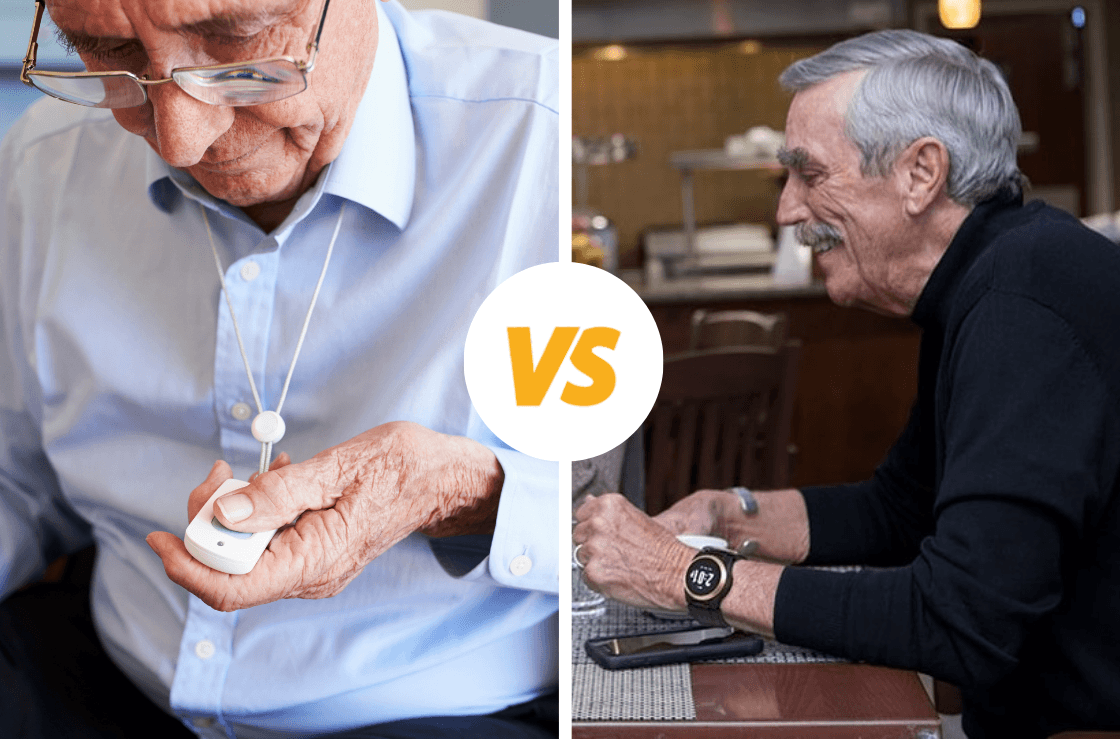
The original medical alert device was a product of the 1970s, and in many ways, it still looks like it. A base station plugged into a landline. A button on a lanyard. Coverage that ends at the front door.
For decades, that was the standard. The problem is that most seniors have stopped wearing these devices altogether.
The Wear Rate Problem
Traditional devices are worn less than half the time on average. Wearers take them off to shower, leave them on the nightstand, or refuse to put them on because they feel like a visible announcement of vulnerability. An emergency watch for elderly adults only protects those who actually wear it consistently, and legacy pendants have never solved that problem.
A System Built for a Different Era
Older systems rely on a base station with a fixed range, so coverage disappears the moment someone steps outside. GPS tracking is rarely included. Automatic fall detection, when available, often comes at an extra cost and performs inconsistently.
Charging creates another protection gap. Most devices require wearers to remove them nightly, leaving users unprotected during hours when falls are most likely. An emergency alert device needs to be with the wearer at 2 a.m. in the hallway, not sitting on a charging dock in another room the room.
How an Emergency Smartwatch Works
A smart watch with emergency alert capability is a self-contained safety device worn on the wrist. Unlike a pendant tethered to a base station, it carries its own connectivity, location tracking, and response system wherever the wearer goes.
Connectivity That Follows You
An emergency watch for seniors connects through two independent channels: your home WiFi network and a nationwide cellular network. At home, the watch connects via WiFi, which delivers a stronger, more consistent signal than cellular alone, particularly in interior rooms with thick walls. Outside the home, it automatically switches to cellular, maintaining coverage nationwide without any input from the wearer.
GPS runs continuously in the background, so when an alert goes out, the monitoring center receives the wearer’s precise location along with their profile.
From Alert to Response
When an alert triggers, whether by button, voice command, or automatic fall detection, it routes directly to a professional, US-based monitoring center. Operators there already know the wearer’s name, address, emergency contacts, medical conditions, and home access details.
Fall detection on a quality emergency alert watch uses an algorithm trained on real fall data, allowing it to distinguish an actual fall from ordinary movement. When the system detects a fall and the wearer is unresponsive, the operator can reach out to emergency contacts and dispatch emergency services directly, without an additional 911 call.
What to Look For in an Emergency Smartwatch
Not all emergency watches for seniors are built to the same standard. These are the criteria that separate a device that genuinely protects from one that just looks like it does.
- Wearability around the clock: An emergency watch for elderly adults works only when it’s on the wrist. Look for a design that’s comfortable enough to wear to bed and in the shower, and that lasts an entire day without becoming an afterthought. A watch that people actually want to wear consistently delivers far more protection than one with superior specs that gets left on the dresser.
- Fall detection quality: Automatic fall detection varies widely across devices. The best systems train their algorithms on real fall data from real wearers, allowing the watch to learn individual movement patterns over time and reduce false alerts. Look for configurable sensitivity and a system that improves with use, not one with a fixed, one-size-fits-all threshold.
- Connectivity reliability: A quality emergency alert watch connects via both WiFi and cellular, not just cellular. Interior rooms, bathrooms, and homes in areas with weak cell signal all benefit from WiFi as a primary indoor connection. Cellular coverage should run on a major nationwide network to ensure reliable reach anywhere in the country.
- Who answers the alert: When an alert goes out, it should reach a trained operator at a professional monitoring center, not route directly to 911. A monitoring center operator knows the wearer’s account information, including medical history, emergency contacts, and home access details, and can calibrate the response to the situation rather than defaulting to a full emergency dispatch.
- Battery design: The battery system determines whether an emergency watch for seniors provides genuine 24/7 protection. A swappable battery design keeps the watch on the wrist during charging, eliminating the nightly gap that dock-based systems create.
- Ease of use: A smartwatch with emergency alert functionality should be easy to use without a learning curve. Single-button activation, voice command support, and zero dependency on a paired smartphone or base station are the markers of a device built for real-world senior use.
How the Kanega Watch Keeps Your Loved One Safe
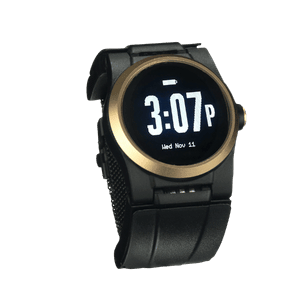
The Kanega Watch was built around a straightforward premise: an emergency watch for seniors is only as good as its ability to protect around the clock, not just during convenient hours. Every feature maps directly to a real gap in what traditional devices have delivered.
- RealFall™ technology: The Kanega Watch uses patented RealFall™ fall detection, trained on actual fall data collected from real wearers. The algorithm learns each person’s natural movement patterns over time, steadily reducing false alerts and sharpening accuracy for genuine falls. When a fall is detected and the wearer is unresponsive, the watch automatically connects to the monitoring center without requiring the wearer to press any buttons.
- Never off the wrist: The watch runs on a patented swappable battery system. Two small batteries power the device for up to 36 hours, and swapping them for a fresh set takes under a minute without removing the watch. For families worried about the overnight hours when other devices sit charging, this is the detail that matters most in an emergency watch for elderly adults.
- Three ways to reach help: Wearers can trigger an alert by pressing the crown button, speaking a voice command, or relying on automatic fall detection. All three routes connect to a US-based, Five Diamond-certified monitoring center whose operators already know the wearer’s address, emergency contacts, medical conditions, and home access details. The response gets tailored to the situation, from dispatching an ambulance to simply calling a neighbor.
- Ready before it arrives: Every Kanega Watch ships pre-programmed. UnaliWear’s Care and Safety Experts configure emergency contacts, WiFi settings, and medication reminders before the box leaves the facility, so setup on delivery requires nothing from the wearer or their family.
Take a look at the FAQ page for answers to the most common questions families ask before ordering.