Falls don’t announce themselves, and emergencies rarely wait for a convenient moment. Mobile medical alert systems give seniors real-time protection wherever they go, not just at home. Inside, you’ll find how GPS location works, what to look for before you buy, and which mobile medical alert system leads the field.
The Safety Gap Nobody Talks About
Falls are the leading cause of injury-related death among older adults, and the majority occur at home. For years, medical alert systems matched that reality: a base station, a pendant, a button you’d press from the kitchen floor.
Seniors today lead far more active lives. A device tethered to the home creates real safety gaps the moment someone heads to lunch with friends, a grocery run, or a grandchild’s recital. Mobile medical alert systems for seniors travel with the wearer, providing coverage on every outing.
As aging in place becomes the norm, mobile medical alert systems for seniors deliver full-range coverage built around how older adults actually live.
How GPS Knows Exactly Where You Are When It Matters Most
Mobile medical alert systems with GPS don’t rely on a single signal to find you. Location accuracy comes from layering three technologies: GPS satellites overhead, nearby cellular towers, and your home’s WiFi network. Each fills in where the others fall short.
Why WiFi Location Matters Inside the Home
Most people think of GPS when they hear “location services,” but GPS is actually just one piece of it. Modern devices determine your location by combining GPS signals with data about nearby WiFi networks and sending all of that to an online system via the internet.
The problem indoors? GPS signals rarely reach inside buildings. That leaves your device relying on visible Wi-Fi networks and an internet connection to pinpoint your location. Cellular can help with location, but it’s not precise enough to reliably direct emergency services to you.
That’s where your home WiFi network comes in. Medical alert devices that connect to it can accurately determine your location inside the house: in a basement, an interior bathroom, anywhere GPS can’t reach.
Location Data the Monitoring Agent Gets Before You Say a Word
When an alert fires, your GPS coordinates are sent to the monitoring agent immediately, whether you fell silently or called out for help. For an unresponsive wearer, that location data lets the agent dispatch emergency services to the right address without waiting for a voice response.
Mobile medical alert systems with GPS that combine all three signals deliver the kind of location accuracy that actually holds up when it matters.
What to Look For Before You Buy a Mobile System
Comparing the best mobile medical alert systems takes more than reading a spec sheet. The right device must work reliably in the specific situations that put seniors at risk, and it must be worn consistently to do any good at all. This free medical alert buyer’s guide walks through every factor worth weighing before you buy.
- Connectivity: A device that runs on cellular only performs well outdoors, but signal strength indoors, especially in interior bathrooms with thick walls, varies widely. The best mobile medical alert systems layer cellular coverage with home WiFi to maintain a reliable connection wherever the wearer happens to be.
- Automatic fall detection: Accuracy varies significantly across devices. Look for systems trained on real fall data from actual wearers, with adaptive technology that gets smarter over time and minimizes false alerts. A configurable sensitivity setting is a strong sign that the manufacturer has thought beyond a basic on/off switch.
- Wearability: Mobile medical alert systems for seniors succeed or fail based on whether seniors wear the devices consistently. Stigma is a real concern, as people do not regularly wear devices when they feel embarrassed. Also, a bulky pendant or a device that needs nightly removal for charging creates predictable gaps in protection, including during nighttime bathroom trips when many falls occur.
- Monitoring: A US-based, 24/7 professional monitoring center responds faster and with more context than a direct 911 call: the agent already knows the wearer’s location, medical profile, and emergency contacts.
- Pricing: When comparing mobile medical alert system reviews and pricing, watch for teaser rates that increase once fall detection is added, and avoid any contract that locks you in for multiple years.
The Kanega Watch: So the Whole Family Breathes Easier
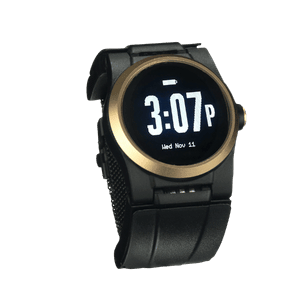
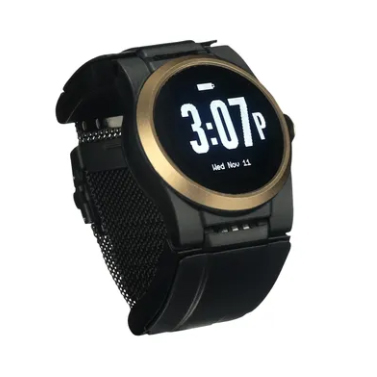
UnaliWear was founded by an electrical engineer who couldn’t find a medical alert that her own mother would wear. That origin shapes every decision in the Kanega Watch’s design: dignity first, with the safety engineering built around it. Among mobile medical alert systems for seniors, it’s the only all-in-one, voice-activated watch designed as a dedicated life-safety device from the ground up.
RealFall™: Fall Detection Trained on Real Falls
Most fall detection algorithms are built on simulated data. The Kanega Watch’s patented RealFall™ technology is trained on actual fall events from real wearers, then refined continuously using AI that learns each individual’s movement patterns over time. The result is fewer false alarms and stronger detection accuracy, without the wearer needing to do anything differently.
Connectivity That Covers the Whole Day
The watch runs on the Verizon network and automatically switches to home WiFi indoors, where cellular signals are weakest. It stores up to seven WiFi credentials, covering a wearer’s home, a family member’s house, or any regular destination. Among mobile medical alert systems with GPS, few cover that range of connectivity in a single wrist-worn device.
24/7 Wear, No Nightly Charging
A swappable two-battery system lets the wearer swap batteries in seconds without removing the watch, keeping protection continuous around the clock. Voice activation, medication reminders, and a large OLED display round out the experience, and every watch arrives pre-programmed and personalized by UnaliWear’s care team before it ships.
Alerts are routed to a US-based, Five Diamond-certified monitoring center, where agents already know the wearer’s name, location, medical profile, and emergency contacts.
What Real Users Say About Mobile Medical Alert Systems
Across mobile medical alert system reviews on Trustpilot and independent senior tech sites, a few themes consistently appear in Kanega Watch feedback. Wearers in their eighties and nineties describe wearing it continuously, including in the shower, without the daily reminder to put it back on. Families report getting calls within seconds of a detected fall, with agents already dispatching help before anyone makes a phone call.
What Families Notice Most
Caregivers and adult children leave reviews that focus on a single word: independence. A 92-year-old living alone. A grandmother who stays in her own home. A mother-in-law who no longer fears falling when no one’s around. For families researching the best mobile medical alert systems, those outcomes tend to be the deciding factor.
What Expert Reviewers Confirm
Independent testing from senior-focused review sites consistently flags the Kanega Watch’s fall detection accuracy, WiFi connectivity, and the fact that fall detection is included at no additional monthly cost. Among mobile medical alert systems reviews from professional evaluators, those three points separate the Kanega Watch from most of the field.